
Clark County Tax Record Fields
Clark County property tax records are assembled across three offices. The Clark County Appraiser finds and values taxable property as of January 1. The Clerk prepares and certifies the rolls, budgets, and levies. The Treasurer bills, collects, and distributes tax for the county, cities, townships, schools, and other taxing units. Reading the fields in that order makes clear where each number began and which office can correct it.
| Field | What It Shows | Where |
|---|---|---|
| Appraised value | Fair-market estimate under Kansas law | Appraiser |
| Assessed value | Appraised value after the class ratio | Appraiser and certified roll |
| Property class | Residential, agricultural, commercial, exempt, vacant, or another class | Parcel record |
| Tax bill and status | Charge, installments, payment, or delinquency | Treasurer |
| Taxing districts | Public bodies whose levies apply | Clerk and Treasurer |
Appraised value and assessed value are not synonyms. The assessed figure is what remains after the statutory class ratio is applied to the appraised value, and it serves as the tax base. Levies then multiply that base. Neither value nor bill is necessarily a sale price, and neither proves title; the latest recorded deed remains the ownership source.
Clark County Assessment Ratios
Kansas law supplies the math behind Clark County property tax records. Residential property is generally assessed at 11.5 percent of fair-market value. Commercial and industrial parcels are generally assessed at 25 percent. Agricultural land is valued on its use and assessed at 30 percent. Other statutory classes can carry other rates under K.S.A. 79-1439. The class shown for a parcel therefore matters as much as the appraised figure itself.
The Kansas Department of Revenue property-tax basics page lays out the first step. Appraised value times the applicable ratio yields assessed value. That result still is not the final bill. Levies come next. Agricultural land follows separate use-value guidance instead.
Two useful percentages. The 11.5 percent residential and 25 percent commercial ratios explain why equal appraised values may yield unequal assessed values.
Clark County Property Tax Calendar
The Clark County tax calendar begins with value. January 1 is the valuation date. Change-of-value notices follow on March 1. A 30-day appeal period runs after those notices. First-half taxes, or the entire current-year amount, come due December 20. The second half is due May 10. Always match each date to the specific tax year and notice at issue.
Save the notice, parcel ID, and search date. The county parcel form refreshes each Sunday, while the appraisal, certification, billing, and payment records move on their own annual schedule. Careful year labels keep an older tax figure from being compared with a new value by mistake.
Note: The responsible Clark County office should confirm any deadline for the specific parcel, notice, and tax year.
Clark County Tax Search Filters
The public Aumentum parcel form goes well beyond a simple address lookup. An owner name works. So does a parcel ID, a quick ID, a street, or a ZIP. Broader nets are possible too. Searchers can filter Clark County parcels by appraised-amount range, property class, acreage, neighborhood code, or section, township, and range. An address-number range offers another path when the exact house number is unclear. The form adds structure details such as style, year built, bedrooms, bathrooms, basement type, and LBCS structure or function codes. Those filters help narrow a Clark County property search. None of them proves legal use or current condition, so treat the results as a starting point.
| Field | Best tax use | Limit |
|---|---|---|
| Appraised amount | Find a known value range | Confirm the valuation year |
| Property class | Separate assessment classes | A dropdown choice is not a parcel finding |
| Section, township, range | Find rural tracts | The deed may contain more detail |
| Parcel or quick ID | Return to one account | An ID does not prove title |
Class options cover agricultural use, commercial and industrial, exempt, farm homesite, not for profit, other, residential, utility, and vacant land. A "TestParcel" label even appears in the list. Treat that one as a portal quirk. It is not evidence that any real Clark County account is a test.
Trace a Clark County Tax Bill
Discovery starts with the free parcel form. The Clark County Tax Roll Search, by contrast, notes that a subscription is required. If that service does not fit, take another route. Bring the parcel ID and legal description straight to the Treasurer. An office inquiry still belongs in the access chain. A parcel assessment alone does not establish whether a tax bill was paid.
- Search Aumentum by address, owner, parcel ID, or rural legal fields. Save the matching identifier and search date.
- Use the subscription roll or ask the Treasurer for the named tax year, installments, special assessments, payment, and delinquency status.
- Compare the account with the Appraiser's value and class. Make sure both records describe the same tract and year.
- If delinquent, ask which publication, county-bid, foreclosure, or sale stage applies. Do not infer a transfer from the debt alone.
- Assessed value
- Appraised value after the statutory class ratio is applied.
- Mill levy
- A rate applied to assessed value for the relevant public bodies.
- Exemption
- Statutory treatment that must be confirmed under the applicable Kansas program.
- Tax lien
- A legal claim tied to unpaid tax whose stage requires an official check.
Clark County Tax Access Screens
The Clark County Appraiser page describes the office's fair-market valuation role. It also draws a clear line between appraisal work and the levy decisions that taxing bodies make.
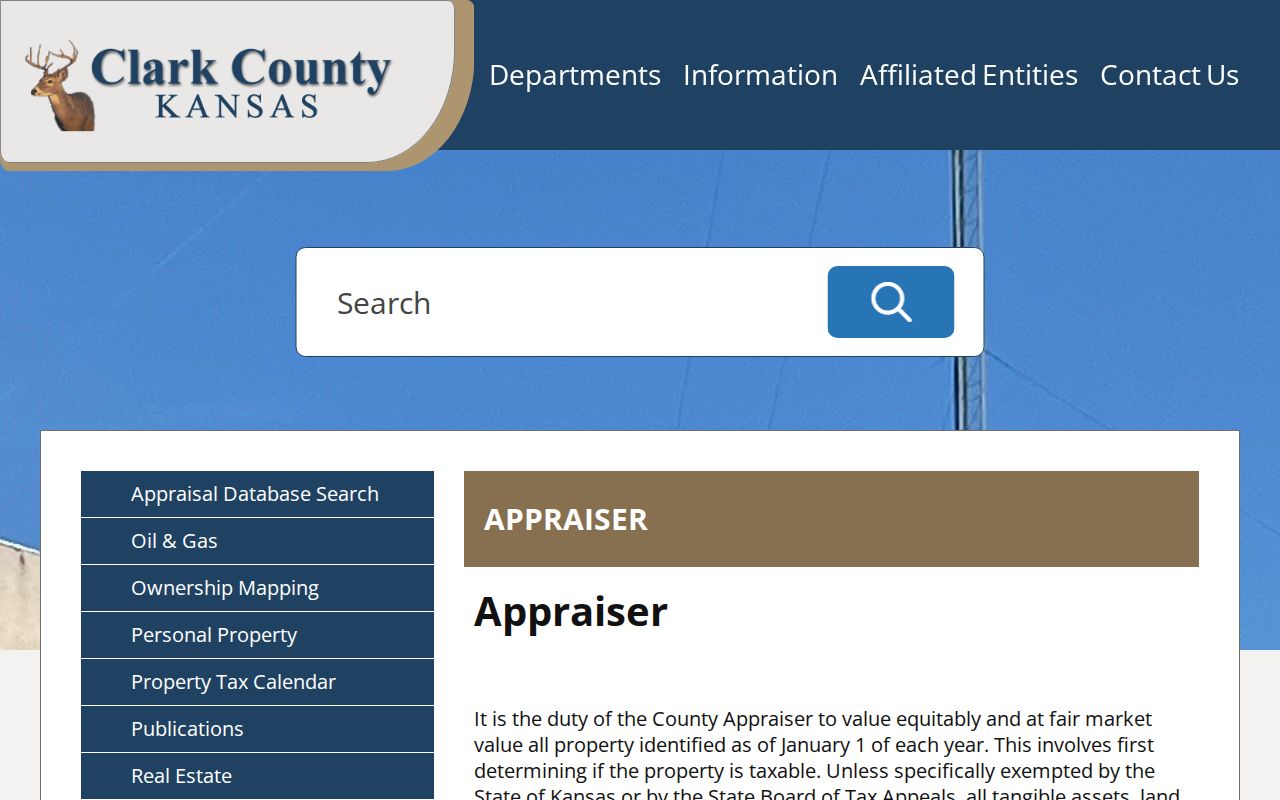
Start with the county's own explanation of appraised and assessed values. It gives you the vocabulary for any Clark County property records search involving taxes. The Tax Roll Search notice then flags one important limit. The tax-roll route runs on a subscription. The tax account details sit behind that gate.
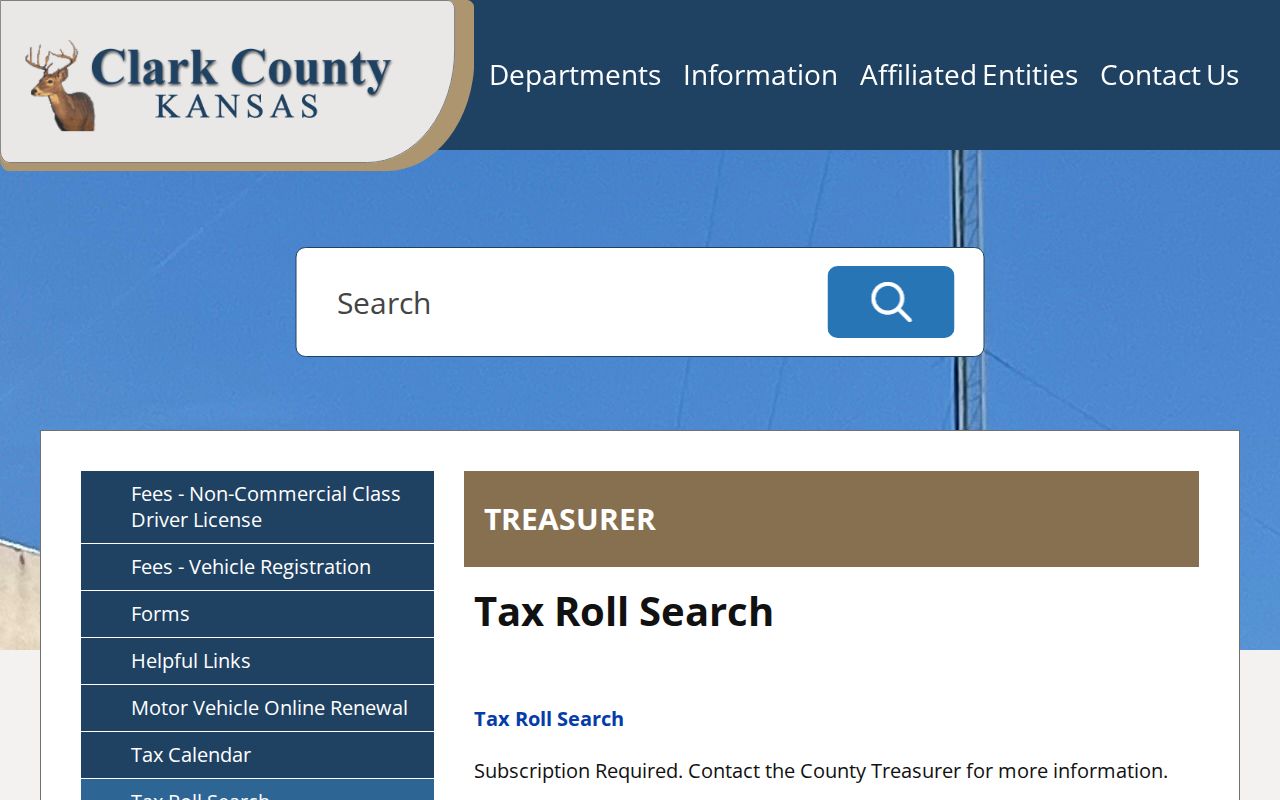
The workflow matters here. Find the parcel first through the public assessment form. That search pulls up the appraisal and the owner of record. Then take the parcel number to the Treasurer's channel for the actual tax bill and payment facts. The Appraiser calendar fills in the timing. It shows when valuation notices go out and when appeals open.
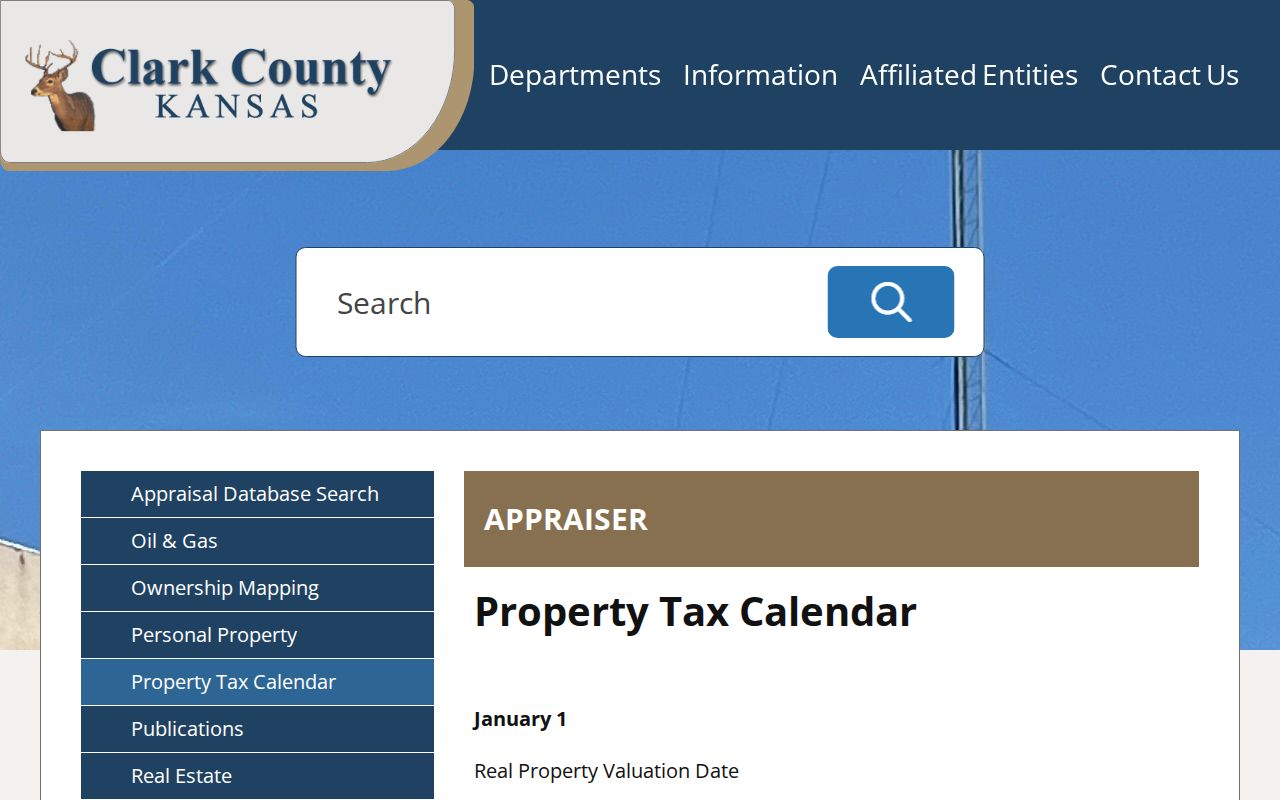
Read side by side, the screens separate an appraisal date, an appeal deadline, and a payment date so a Clark County taxpayer never confuses the three.
Clark County Delinquent Tax Trail
Unpaid Clark County property tax records travel a long chain. The Treasurer, County Attorney, courts, Sheriff, and Register of Deeds each hold one piece. A November 5, 2025 county notice gave a dated example. It reported that year's delinquent list had been published in early September. It referred tax-sale inquiries to the County Attorney. Treat that as a single dated example. It is not a fixed annual publication date. The Treasurer calendar lays out the stages. It moves from publication, to a county purchase phase, then to foreclosure or sale. Sheriff sale notices may run on the county site and in a local newspaper. The sales themselves happen at the courthouse. Follow the tax account and the case file. Then trace the sale confirmation and the redemption status. Finish with the deed or release recorded with the Register. A tax debt alone never names a new owner of record.
- Keep the parcel ID and legal description.
- Record the tax year and notice date.
- Check the court file for later orders.
- Return to the Register for the final instrument.
Contest Clark County Assessed Value
Start with the change-of-value notice, not the tax bill. Keep it and request review within 30 days. Kansas Revenue guidance says the county must produce evidence supporting its value, and it gets no automatic presumption of correctness. A strong file helps. Include property facts, dated photos, comparable sales, repair records, permits, surveys, and any restrictions affecting value. K.S.A. 79-503a makes a sale one factor among many. Classification, size, location, depreciation, cost, productivity, income, restrictions, and comparable property all matter too. One sale price never settles the whole appraisal. Keep the appeal aimed at the Appraiser's valuation evidence; billing and collection questions stay with the Treasurer.
Protect the deadline. Clark County provides 30 days from the change-of-value notice, so confirm the exact due date with the Appraiser.
Clark County Tax Record Access
The portal is only one route in. Aumentum runs the public assessment search, and the Treasurer offers a subscription roll. Walk-ins work too. The Appraiser, Treasurer, and Clerk share offices at 913 Highland in Ashland, so a phone call, counter visit, or written request makes sense whenever the portal skips a year, notice, or account detail. Name the parcel, the year, the record type, and the copy format you want.
KORA requires inspection unless an exception applies. The Kansas Attorney General says a custodian should respond as soon as possible, generally by the end of the third business day, or explain the delay and give an estimated response time. Reasonable actual costs may apply. The office does not have to create a custom calculation, answer a legal question, or run a title search.
Ask narrowly. Request an existing certified roll entry, value notice, levy record, tax account, or delinquency notice by name. The Clark County property value page compares assessed, market, and sale figures side by side.
The Clerk is part of the handoff too. That office prepares and certifies the tax roll, budgets, and levies, and serves as the county's KORA contact. Appraisal questions go to the Appraiser. Payment questions go to the Treasurer. Roll certification and records requests often land with the Clerk. Naming the exact record avoids overlap.
Court records appear only when a dispute or enforcement step creates a case. Kansas CaseSearch offers public case information. Still, a courthouse terminal or written request may be needed for an actual document. For foreclosure or tax-sale research, save the case number. Then return to the Register for the recorded sheriff's deed, release, or other final instrument. That prevents confusing a public notice with the outcome.
Exemption questions need a named program and a current eligibility check. Kansas Revenue publishes statewide exemption material. The parcel form has an Exempt class option. The label alone proves nothing. Ask for the applicable determination and year, since a class label, assessed value, and final tax treatment can live in different records within the same file.